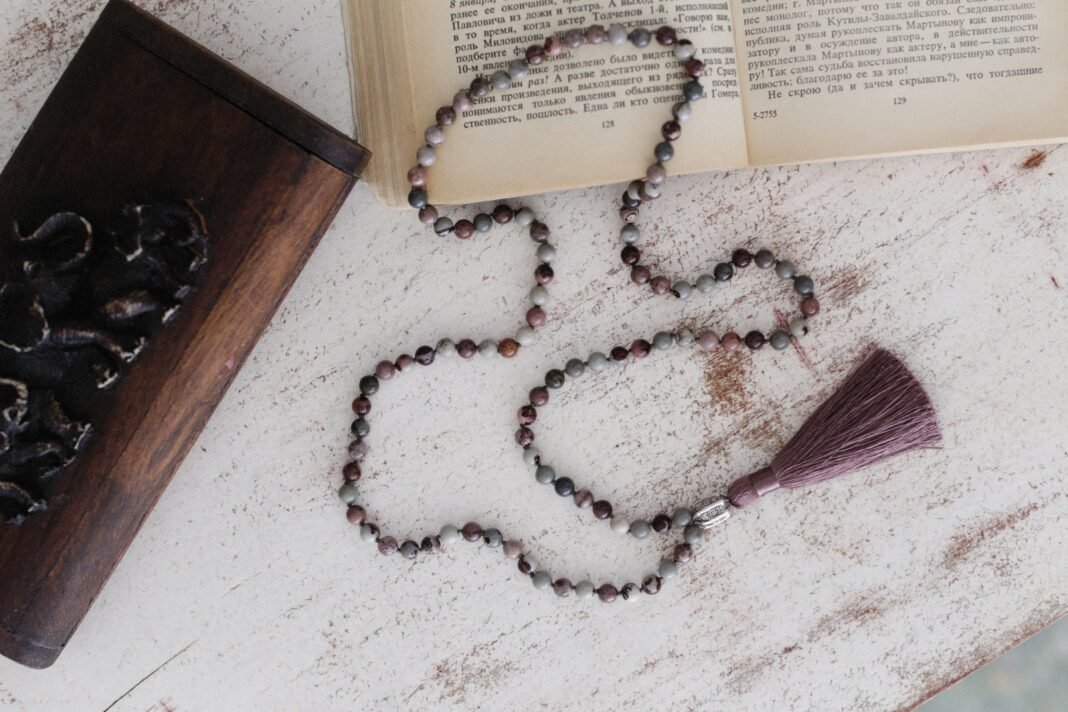
A handmade wooden jewellery box can keep small treasures organised while adding a warm, natural detail to a dressing table. But the best choice is not always the most elaborate box. Size, compartments, surface finish and how you plan to use it matter more than decoration alone.
1. Choose a size that fits your jewellery
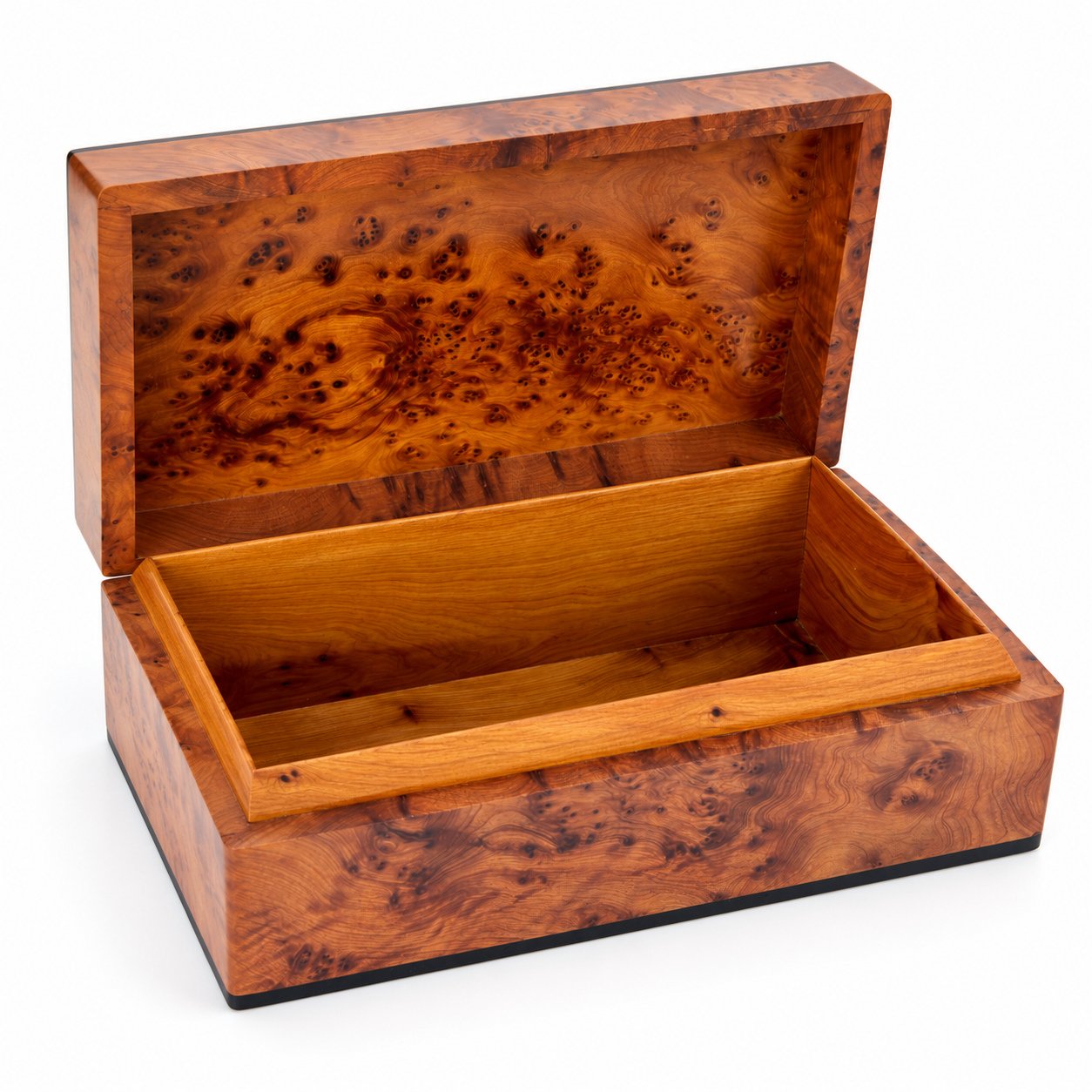
Start with the pieces you reach for most often. A compact box can work well for rings, earrings and a few necklaces. If you own larger bracelets, watches or statement pieces, look for a deeper interior and check the usable dimensions rather than relying on exterior measurements.
Before buying, compare the interior length, width and depth with your longest or bulkiest item. Remember that thick walls, a lid and any removable tray reduce the space available inside.
2. Look closely at the compartments
A beautiful box is only practical if its layout suits your collection. Separate spaces can help prevent necklaces from tangling and make earrings easier to find. Ring rolls are useful for rings, while an open compartment may be better for larger objects.
- Rings: choose padded slots or a small dedicated section.
- Necklaces: favour individual compartments or hooks where available.
- Earrings: shallow divided storage makes pairs easier to see.
- Mixed collections: a removable tray can provide flexibility.
If you prefer a simple wooden keepsake box without divisions, small fabric pouches can help separate delicate pieces.
3. Understand the wood and its grain
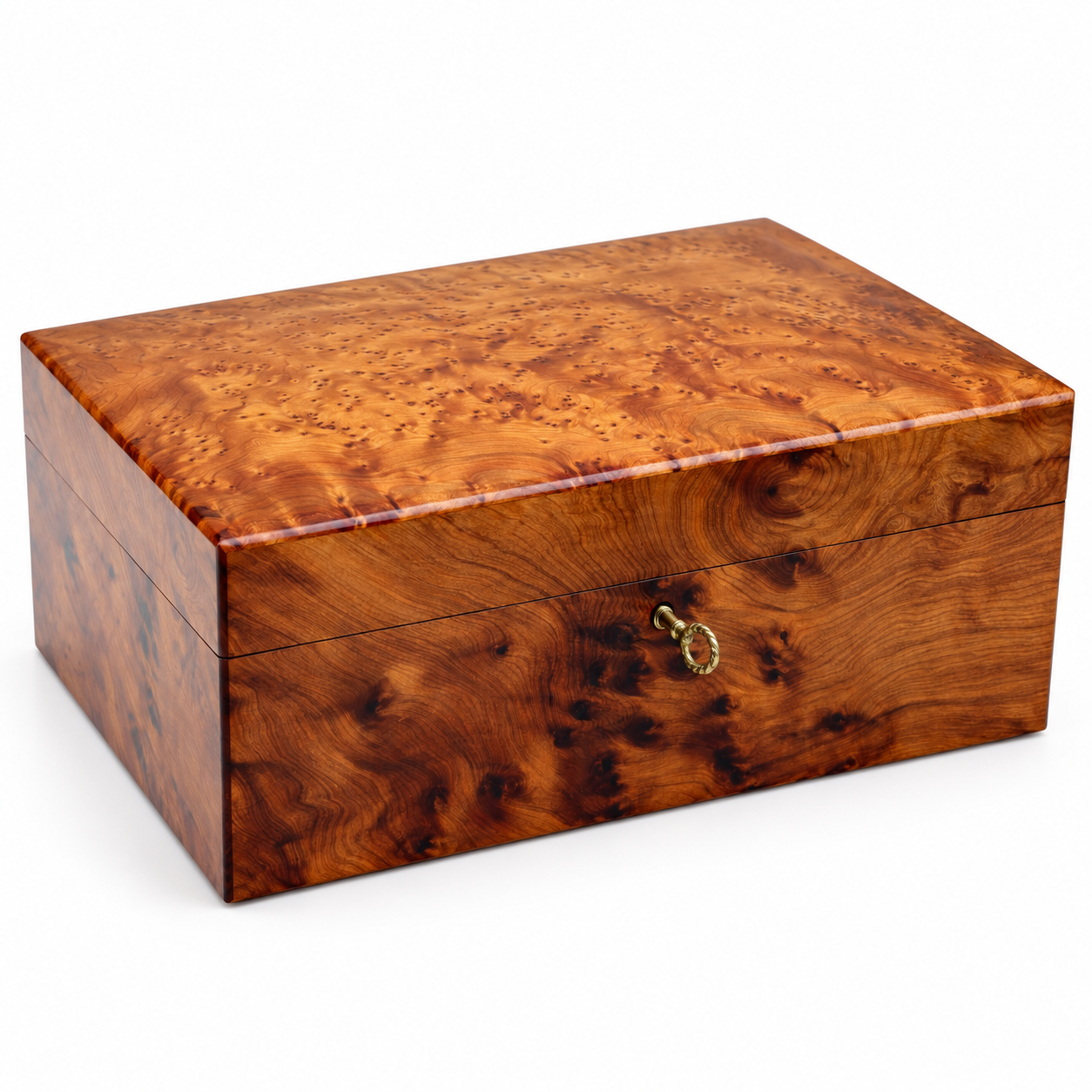
Wood species influence colour, grain and the overall character of a box. Even pieces made from the same type of wood can look different because natural grain patterns vary. These differences are part of the appeal of handcrafted objects, not necessarily defects.
Moroccan thuya wood is appreciated for its distinctive figuring and warm appearance. If you are considering a thuya box, our thuya wood guide explains the material and what to look for when shopping.
4. Check the finish, lining and hardware
Inspect product photographs for smooth edges, neatly fitted corners and an even finish. A lining can help reduce rubbing against delicate jewellery, but it should be cleanly attached and free from loose fibres. Check that the lid opens comfortably and that hinges and any clasp align properly.
Ask the maker about the finish if you are unsure how to maintain it. Different oils, waxes and lacquers call for different care, so avoid assuming that every wooden box should be polished in the same way.
5. Decide whether decoration or simplicity suits your space
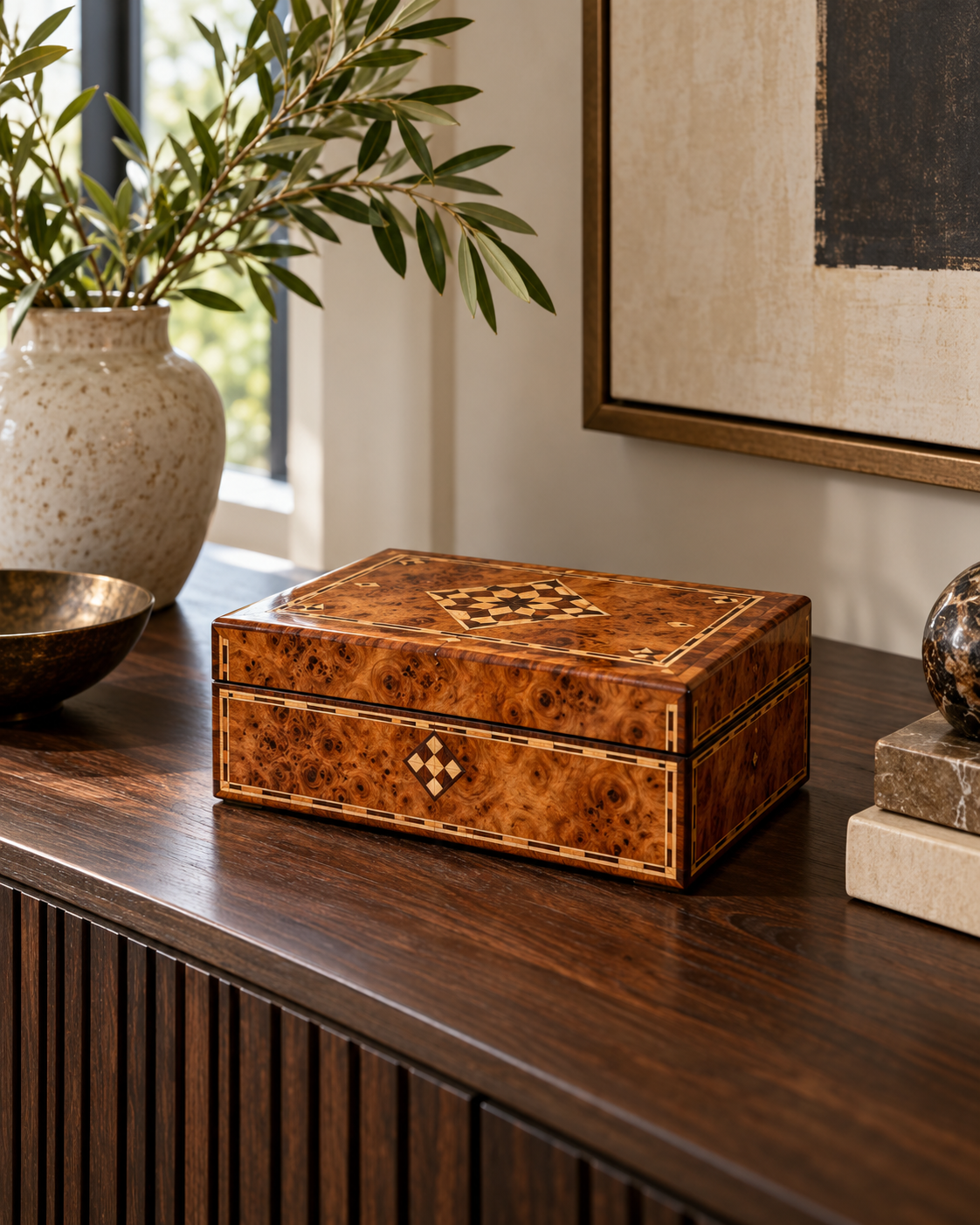
A plain wooden jewellery box can blend into minimalist interiors, while marquetry or inlaid details create a more decorative focal point. In Essaouira, woodworkers are known for intricate decorative work; explore the process in our article on thuya and marquetry in Essaouira.
Think about where the box will sit. On an already busy shelf, a quieter design may work best. On a simple bedside table, a patterned box can add texture without requiring other accessories.
6. Ask practical questions before ordering
For handmade pieces, product listings should make the dimensions, materials and finish clear. If something is missing, ask the seller before purchasing. Useful questions include whether the measurements are internal or external, whether the box is lined, whether the pictured grain is representative, and whether the item is ready to ship or made to order.
For gifts, consider the recipient’s jewellery habits and available space rather than choosing solely by appearance. A modest, thoughtfully selected box is often more useful than a large one with compartments that will remain empty.
How to care for a handmade wooden jewellery box
Keep your box away from prolonged direct sunlight, standing water and sources of strong heat. Dust gently with a soft dry cloth, and avoid soaking the wood or using harsh cleaning sprays. For more detailed advice, read our wooden box care guide.
Final checklist
The right handmade wooden jewellery box has enough usable space, a layout that suits your collection, a finish you can care for and a design you will enjoy seeing every day. Compare those practical details first; then let the wood grain and craftsmanship guide your final choice.