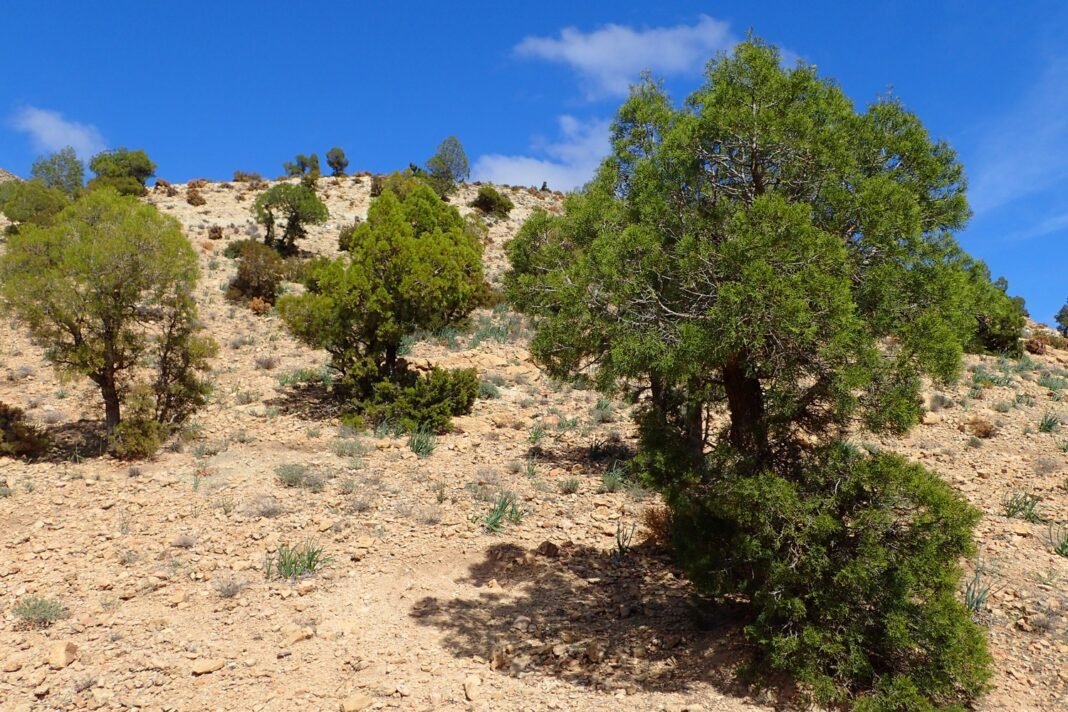
A polished piece of thuya can look like a small landscape. Warm brown tones run across the surface, while darker flecks gather in clusters or follow the grain. The wood comes from an evergreen tree native to Morocco and other parts of the western Mediterranean.
What Is the Moroccan Thuya Tree?
The Moroccan thuya tree (Tetraclinis articulata) belongs to the cypress family. It has small, scale-like leaves and compact cones that turn brown as they mature. In Morocco, thuya wood is closely associated with Essaouira, where artisans use it to make boxes, chessboards and other decorative pieces.
What Gives Thuya Burl Its Distinctive Grain?
A burl is a rounded growth where the wood fibres follow an irregular pattern. When cut and polished, thuya burl can reveal dark pinpoints and swirls against a honey-brown background. The pattern varies from piece to piece, so two boxes of the same size can have very different-looking lids.
Look at a thuya box in daylight and follow the edge of a dark cluster into the lighter wood. The shifts in colour and grain are often easiest to see across the lid.
https://decorativecraftwork.co.uk/from-thuya-tree-to-marquetry-in-essaouira/