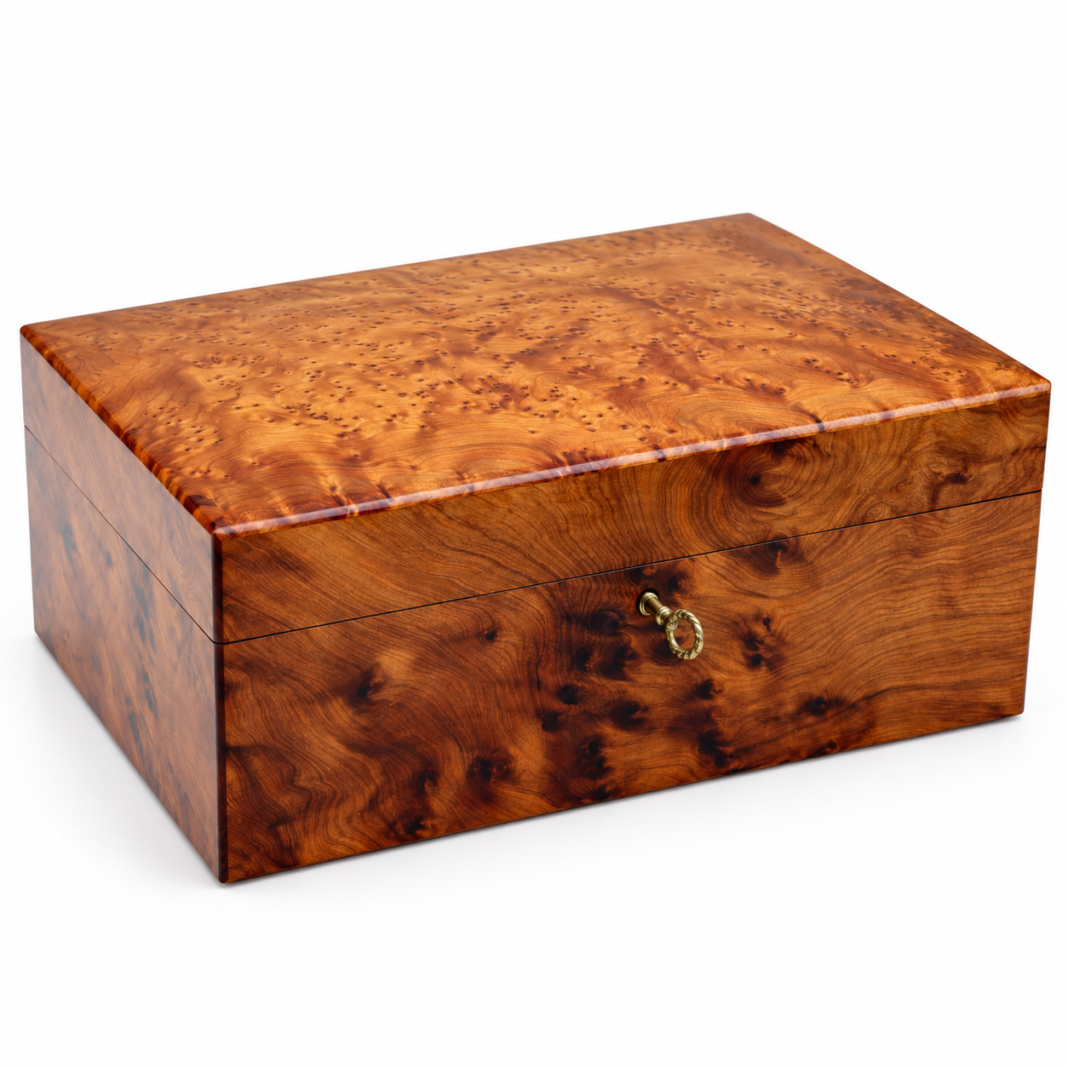
Choosing between thuya wood and walnut for a decorative box or home accessory? Both can look beautiful, but their grain, colour and typical uses are different. This guide explains what to look for when comparing finished pieces, particularly if you are shopping for handmade wooden gifts in the UK.
A useful distinction comes first: thuya in Moroccan craftwork generally refers to wood from Tetraclinis articulata, especially highly figured root burl used for decorative pieces. Walnut commonly refers to timber from Juglans species. Exact appearance varies by species, cut, finish and individual piece.
Thuya wood vs walnut at a glance
| Feature | Moroccan thuya | Walnut |
|---|---|---|
| Typical colour | Golden brown to reddish brown; figured burl may show darker swirls | Light to deep chocolate brown, sometimes with grey or purple undertones |
| Grain appearance | Often dramatic, irregular figuring in burl pieces | Often flowing, straight or wavy grain; figured walnut also exists |
| Common decorative uses | Jewellery boxes, marquetry, keepsake boxes and small ornaments | Furniture, cabinets, bowls, boxes and decorative accessories |
| Finish and care | Follow the maker’s finish-specific advice | Follow the maker’s finish-specific advice |
What does thuya wood look like?
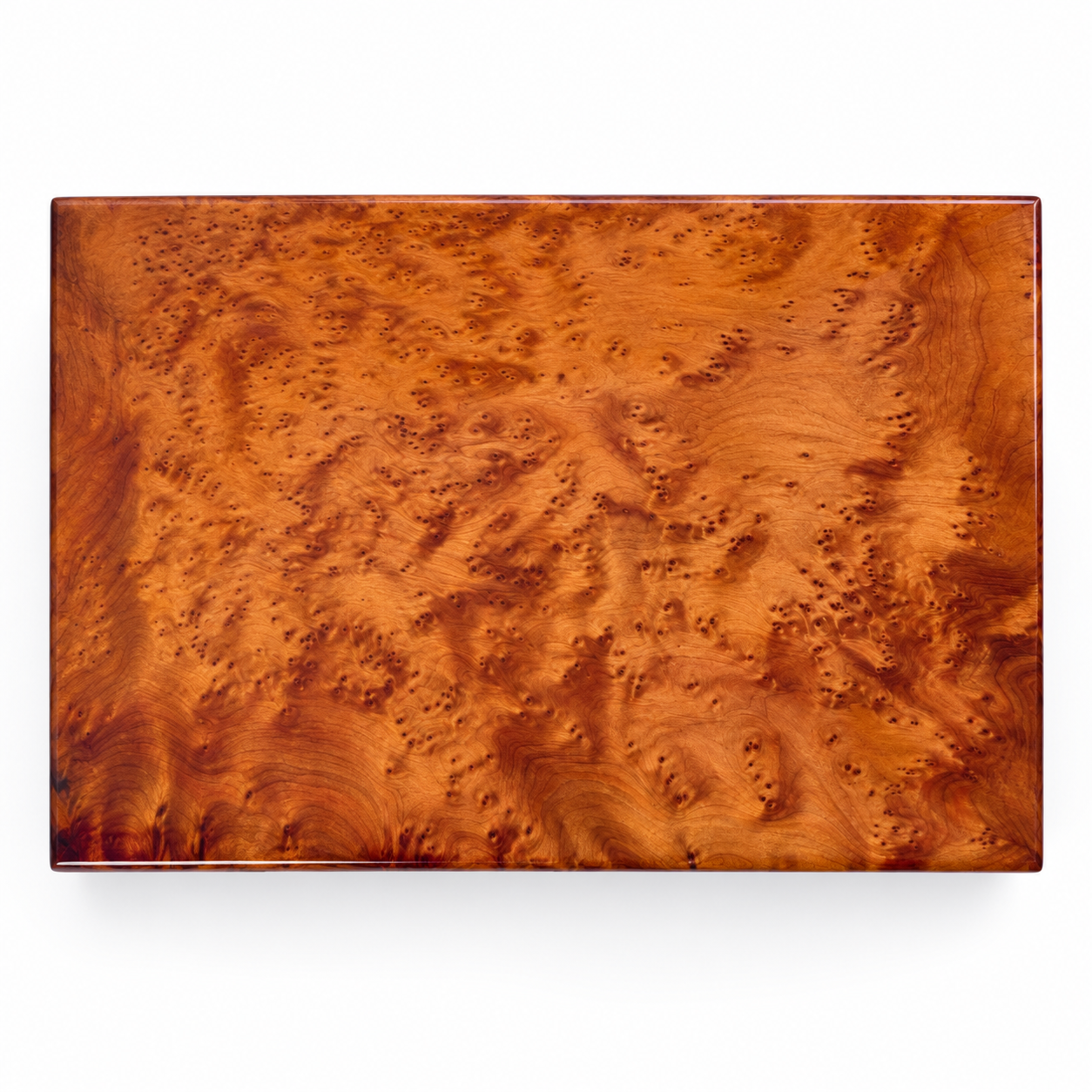
Moroccan thuya is prized in decorative craftwork for its warm colour and sometimes striking, knot-like figuring. In burl sections, the grain can form dense eyes, swirls and irregular patterns that make each visible surface distinctive. Not every thuya object uses burl, however, and appearance alone is not proof of wood species.
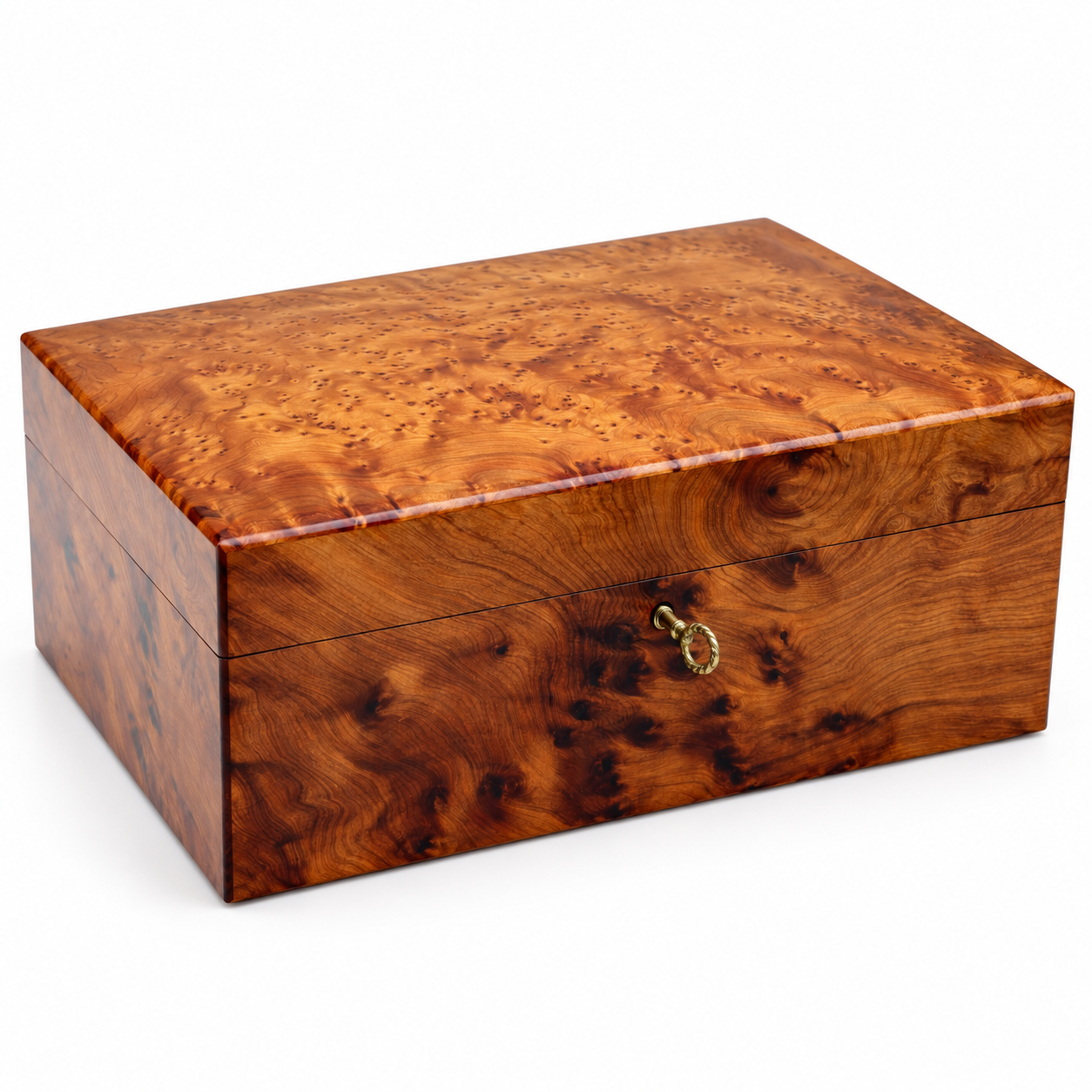
Thuya has a long association with woodcraft around Essaouira. If you would like the background to the material, read our guide to the Moroccan thuya tree and our article on marquetry craftsmanship in Essaouira.
What does walnut wood look like?
Walnut is generally recognised for its richer brown tones and elegant grain. Many walnut boards have a more continuous, flowing appearance than strongly figured thuya burl, but there is plenty of variation. Some walnut pieces show curls, knots or contrasting sapwood, while staining and oiling can alter the apparent colour of both woods.
When comparing online photographs, look for images taken in natural light and ask whether the piece has been stained. A dark finish can make a lighter wood resemble walnut, while a glossy finish can intensify the contrast in thuya grain.
Which wood is better for a jewellery box?
Neither species is automatically the better choice. For a small decorative jewellery box with a striking surface pattern, figured thuya can be appealing. For a quieter, more understated look, walnut may suit a modern bedroom or dressing table. Construction quality matters more than the name of the wood: check how the lid fits, whether the hinges move smoothly, the finish around the edges and whether the interior suits your jewellery.
Our handmade wooden jewellery box buying guide covers sizing, compartments and practical details worth checking before purchase.
Thuya burl and walnut grain: why the difference matters
The word burl describes unusual, highly figured wood growth rather than a separate tree species. Thuya burl is particularly associated with small luxury craft objects. Walnut can also have figured or burl grain. Therefore, a comparison between ‘thuya burl’ and ordinary straight-grained walnut is not a like-for-like comparison of every possible piece of each species.
What about durability and maintenance?
For a decorative box kept indoors, the quality of the joinery, protective finish and everyday handling often matter more than a simple species ranking. Wood responds to changes in humidity, so avoid damp surfaces, strong heat and long periods of direct sunlight. Dust gently with a soft cloth; do not assume a polish or oil is suitable for every finish.
For more detailed advice, see our wooden box care guide.
How to choose between thuya and walnut when buying online
- Check the exact material: ask whether the listing describes solid wood, veneer, burl veneer or a mixed-material construction.
- Inspect several photos: look at the lid, sides, corners, interior and underside rather than relying on one polished hero image.
- Compare dimensions: measure the intended shelf, dressing table or gift contents before ordering.
- Ask about the finish: a waxed, oiled or lacquered surface may need different care.
- Confirm provenance carefully: a Moroccan-style pattern does not by itself establish where an item was made or what species it contains.
Frequently asked questions
Is thuya wood the same as walnut?
No. Moroccan thuya and walnut come from different botanical groups. Their colours can overlap, but their grain and typical decorative uses often differ.
Is all thuya wood heavily figured?
No. The dramatic swirling patterns often shown on decorative boxes are especially associated with figured burl. Other cuts can look more restrained.
Which is more expensive: thuya or walnut?
There is no reliable universal answer. Price depends on the grade and figure of the wood, the amount used, craftsmanship, dimensions, finish and seller. Compare similar finished items rather than timber names alone.
Final thoughts
Choose thuya if you are drawn to expressive, richly figured surfaces and Moroccan decorative craft traditions. Choose walnut if you prefer its familiar deeper-brown palette or a subtler grain. In either case, assess the workmanship, dimensions and finish of the actual piece before buying.