If you are choosing a decorative wooden box, panel or piece of furniture, you may come across the terms wood carving and marquetry. Both can create beautiful patterns, but they achieve them in very different ways. Understanding the difference helps you read product descriptions, appreciate the workmanship and choose a piece that suits your home.
What is wood carving?
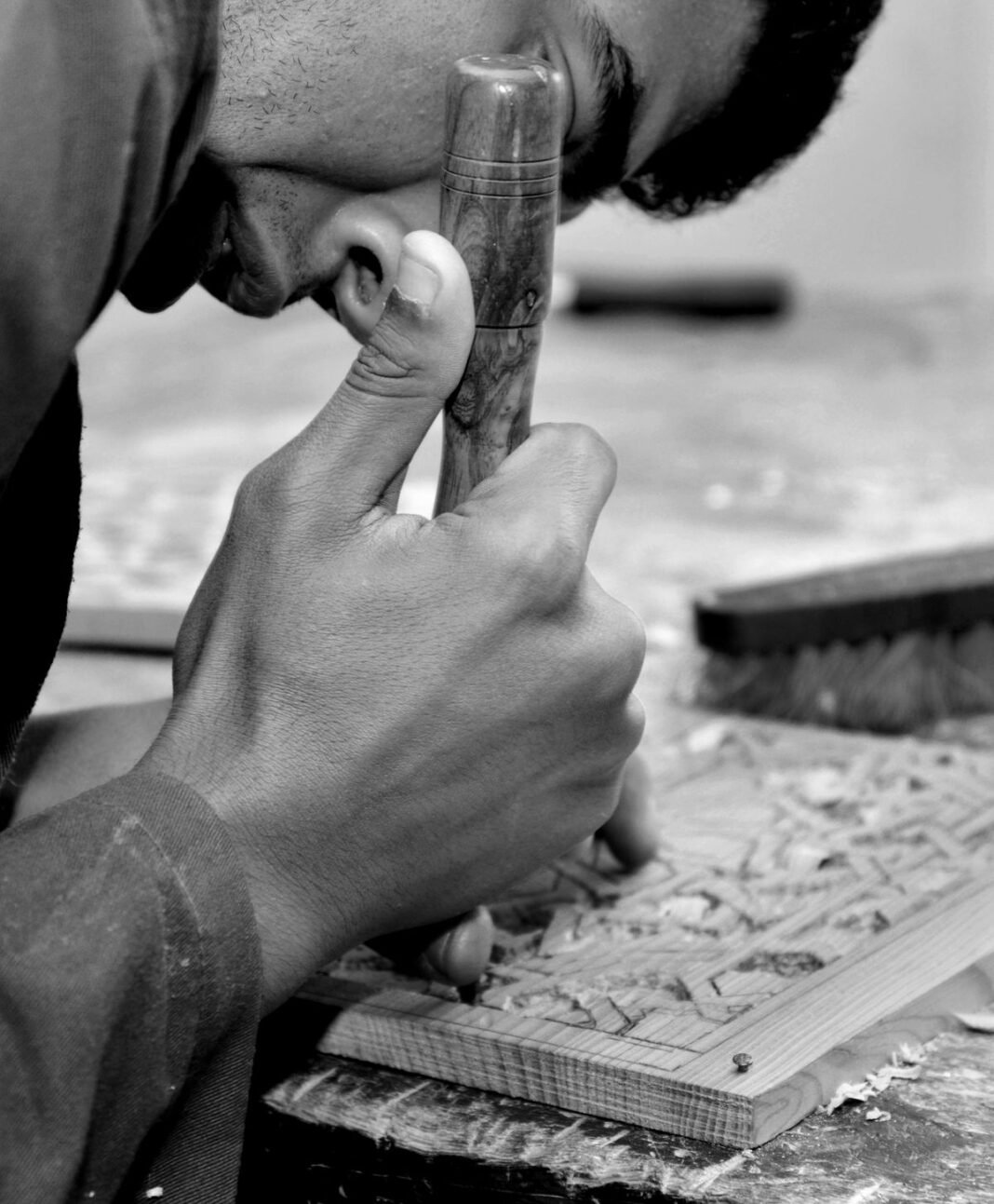
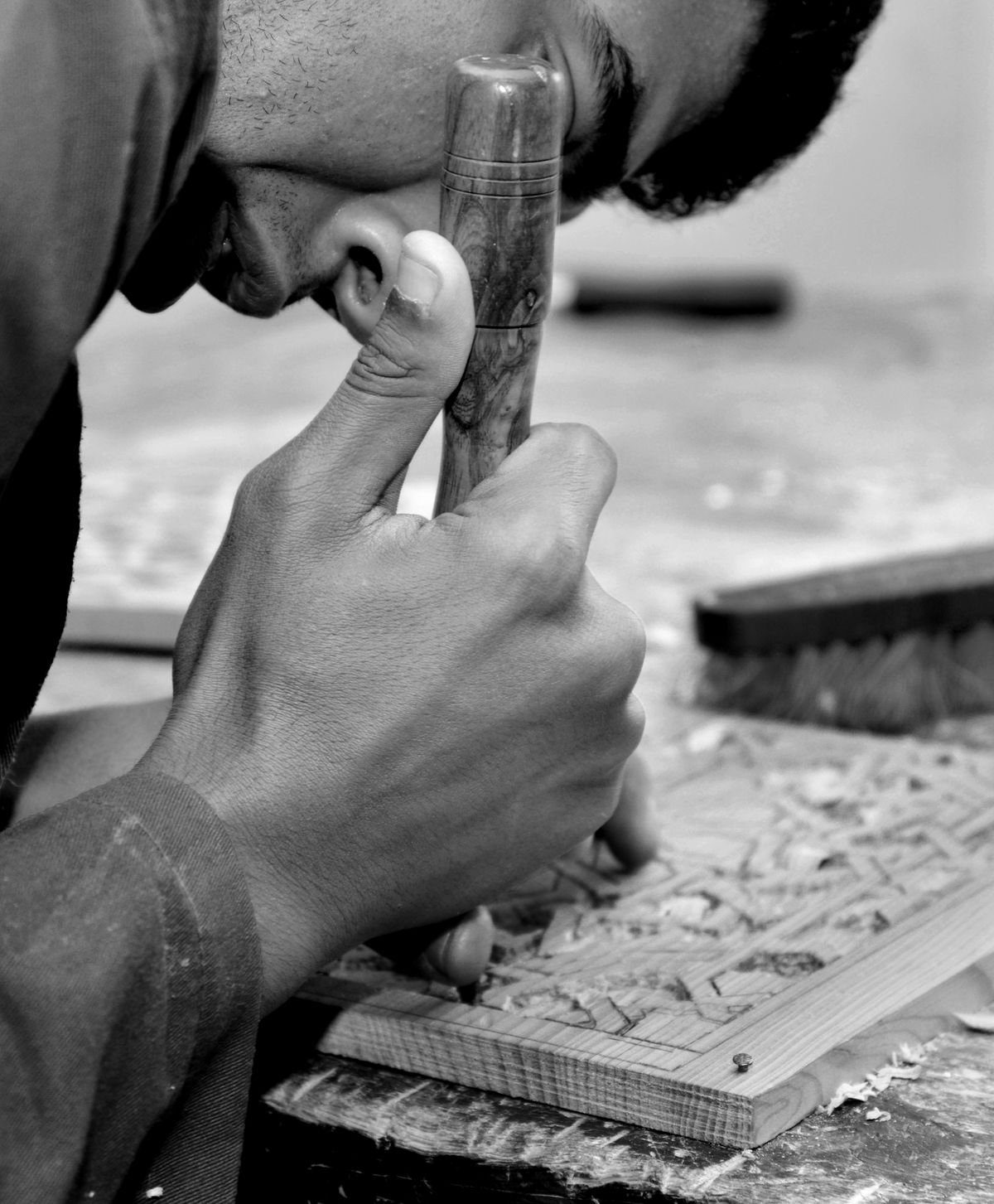
Wood carving removes material from a piece of wood to produce shapes, lines, textures or relief. A craftsperson might use chisels, gouges or other cutting tools to make a floral border, a geometric motif or an openwork screen. The design is created by shaping the wood itself, rather than attaching a pattern to its surface.
Carving can be shallow and subtle or deep enough to create pronounced shadows. A carved panel often looks different as the light changes because raised and recessed areas catch the light differently.
What is marquetry?
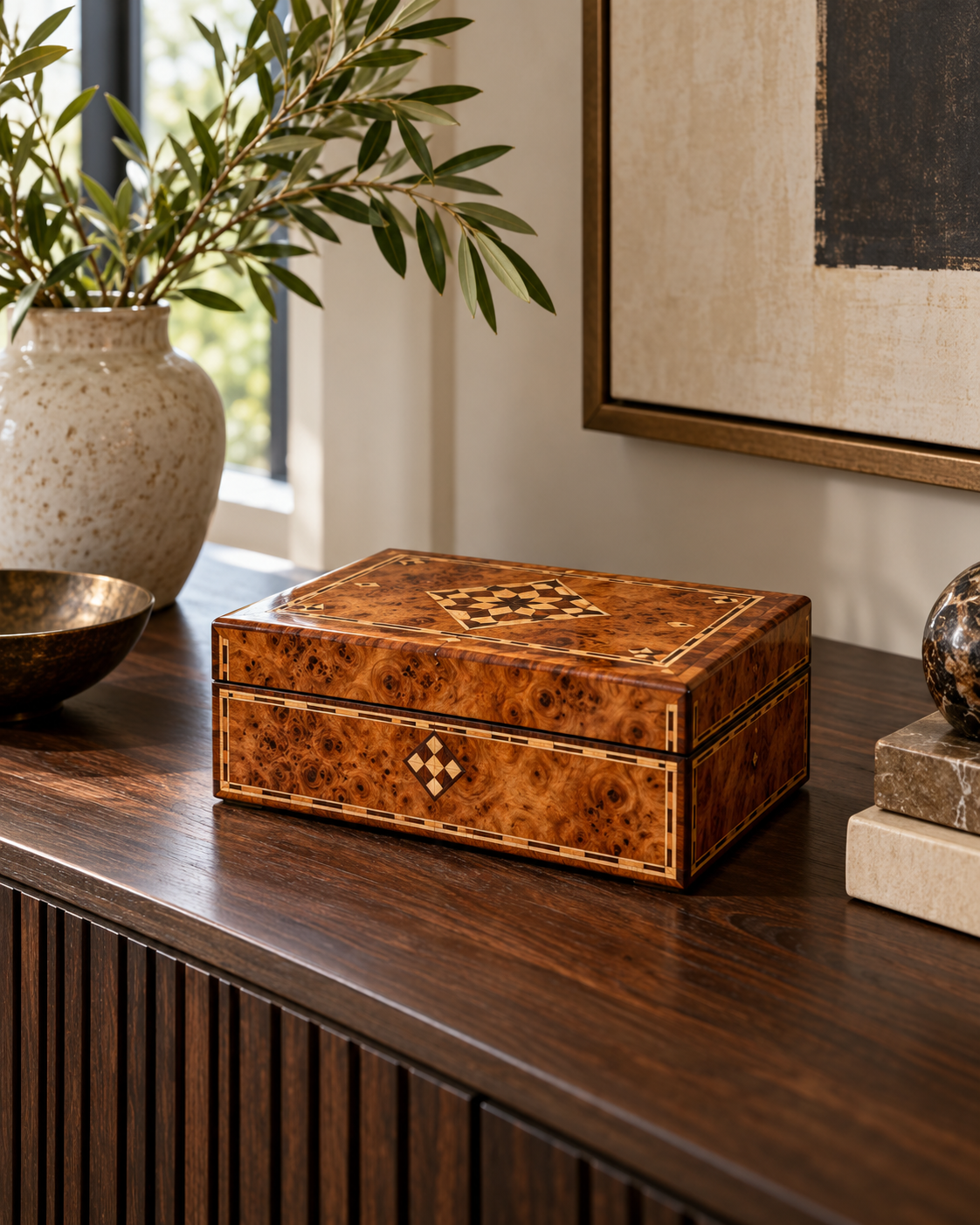
Marquetry creates a decorative picture or pattern by arranging pieces of veneer or other thin materials on a surface. Rather than cutting the main wooden object into a raised design, the maker cuts and fits contrasting pieces into a planned composition, then fixes and finishes the surface.
Geometric marquetry can look particularly striking on jewellery boxes and decorative lids. Colours and patterns may come from different woods and their natural grain. Some objects combine marquetry with other decorative techniques, so the exact construction is worth checking with the seller.
Wood carving vs marquetry: the key differences
- Method: carving removes and shapes wood; marquetry assembles a surface pattern from fitted pieces.
- Texture: carving often has noticeable depth; marquetry is usually comparatively flat and smooth.
- Visual effect: carving uses shadows and relief, while marquetry often uses colour and grain contrast.
- Where you see it: carving is common on furniture, panels and architectural details; marquetry is popular on boxes, tabletops and decorative panels.
- Care: both benefit from gentle cleaning, but deep carving can collect dust in recesses and decorative veneers should be protected from excess moisture.
How do you recognise the technique in product photographs?
Look at a photograph taken from the side. If a motif casts shadows and has visibly raised edges, it may be carved. If a geometric design sits level with the surrounding surface and appears to be made from contrasting pieces, it may be marquetry. However, lighting, lacquer and image resolution can make details difficult to judge. Ask for close-up photographs if the technique matters to your purchase.
On a wooden jewellery box, inspect the lid, corners and edges. A close-up can reveal how neatly the decorative pieces meet and whether the finish looks even. Our guide to choosing a handmade wooden jewellery box covers other practical checks, including storage and hardware.
How do these techniques relate to Moroccan craftsmanship?
Moroccan decorative woodworking encompasses several traditions and regional styles, including carving, painted decoration and marquetry. Essaouira is especially associated with decorative work using thuya wood. To understand the material itself, read our thuya wood guide, or explore our article on marquetry in Essaouira.
The photograph of carving above was taken in Fès; it illustrates a technique rather than the production of any particular Decorative Craftwork item. Different workshops use different methods, and a product should not be described as hand-carved or marquetry unless that is genuinely how it was made.
Which should you choose for your home?
Choose carved wood if you enjoy tactile detail, depth and the play of light across a surface. Choose marquetry if you prefer intricate flat patterns, contrasting woods and a polished decorative finish. Neither is automatically better or more durable: the underlying construction, materials, finish and quality of workmanship matter more than the technique alone.
For a UK home, think about the piece’s location. A decorative box on a bedside table may benefit from a smooth lid that is easy to dust, while a carved accent on a shelf can add texture to a simple room. Check dimensions in centimetres against your available space, and ask about the finish before using any polish.
How to care for carved wood and marquetry
Dust both gently with a soft, dry cloth. For recessed carving, a soft clean brush may help remove dust without scraping the surface. Avoid soaking either type of decoration, placing it next to radiators or leaving it in prolonged direct sunlight. Finishes vary, so follow the maker’s instructions rather than applying oil or wax automatically. Our wooden box care guide offers more practical advice.
Frequently asked questions
Is marquetry the same as wood inlay?
The terms are related but not always interchangeable. Marquetry generally refers to assembling decorative pieces into a surface composition; inlay often describes setting material into recesses cut into a base. Product descriptions sometimes use the words loosely, so ask how the pattern is made if you need precision.
Can one piece combine carving and marquetry?
Yes. A wooden object can have carved edges or feet alongside a marquetry-decorated panel or lid. The presence of one technique does not rule out the other.
Is carved wood harder to clean?
Detailed recesses can trap more dust than a flat finished surface. Gentle, regular dusting with a soft brush is usually preferable to aggressive cleaning.
A useful final check before buying
Ask what the decorative technique is, what materials are used, how the surface is finished and whether close-up images show the actual item. Those four questions will tell you more than a generic “handcrafted” label and help you choose woodwork you can enjoy for years.