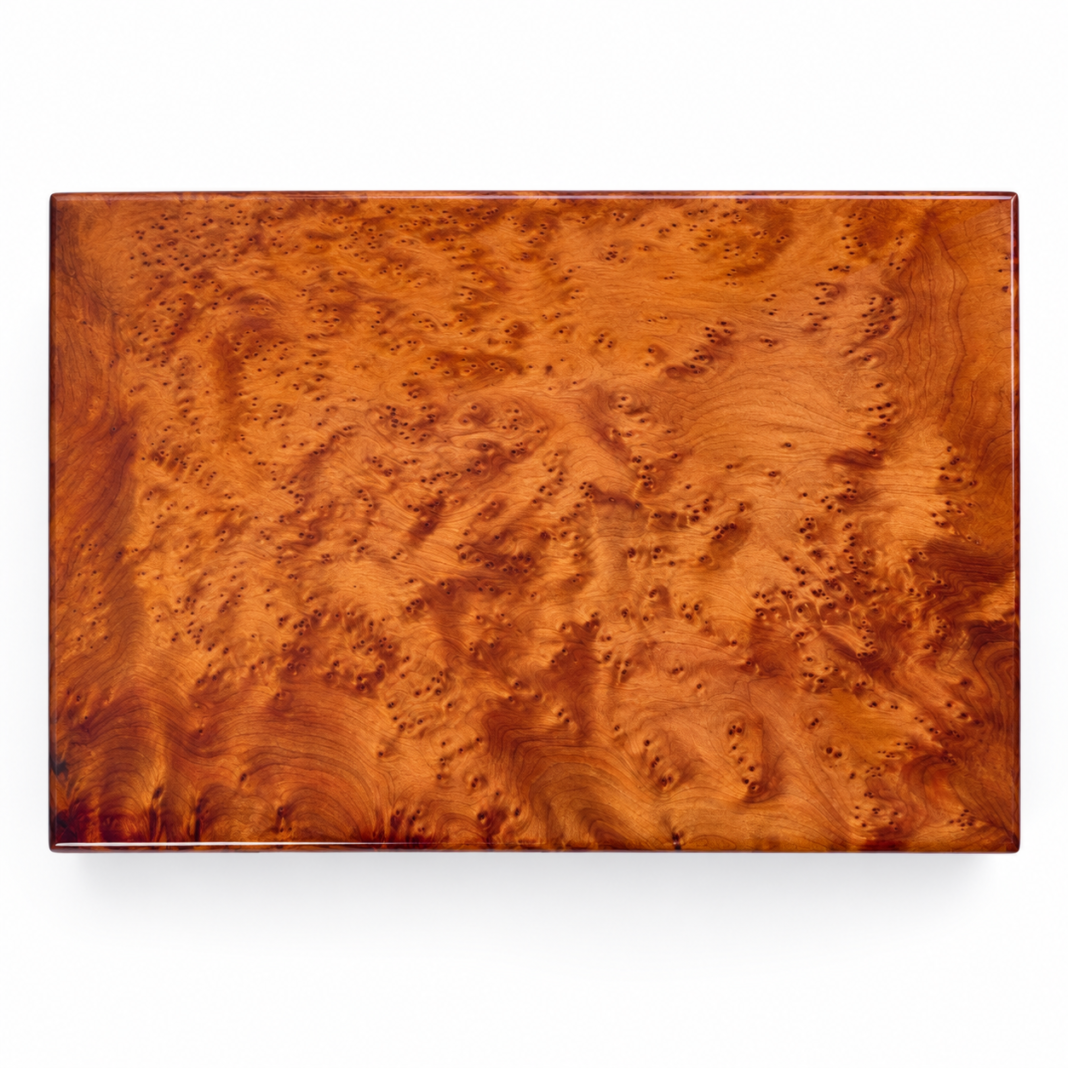
If you have ever admired the swirling, eye-like grain of a handmade wooden box, you may have been looking at burl wood. Its irregular patterns can turn a small, useful object into a distinctive decorative piece. But what is burl wood, how does it form, and what should UK shoppers check before buying a burl wood box?
This guide explains the material without confusing the unusual growth pattern with a separate species of tree. It also looks at Moroccan thuya burl, a material closely associated with decorative woodworking around Essaouira.
What is burl wood?
A burl (also written burr in British English) is an abnormal, often rounded growth on a tree. Within the growth, wood fibres may develop in irregular directions, creating the distinctive swirling, clustered or eye-like grain that becomes visible when the wood is cut and polished. A burl is not a tree species: different kinds of trees can produce them.
Burls are associated with disruptions to normal growth, which can involve stress, injury or biological factors. It is not accurate to say that every burl has one specific cause, or that all rounded growths on trees will contain attractive figured timber.
What does burl wood look like?
Instead of long, relatively straight lines, a burl surface may show tiny knots, curls, dark eyes and overlapping waves. No two cuts from the same burl are exactly alike. The appearance also changes with the species, the direction of the cut and the finish.
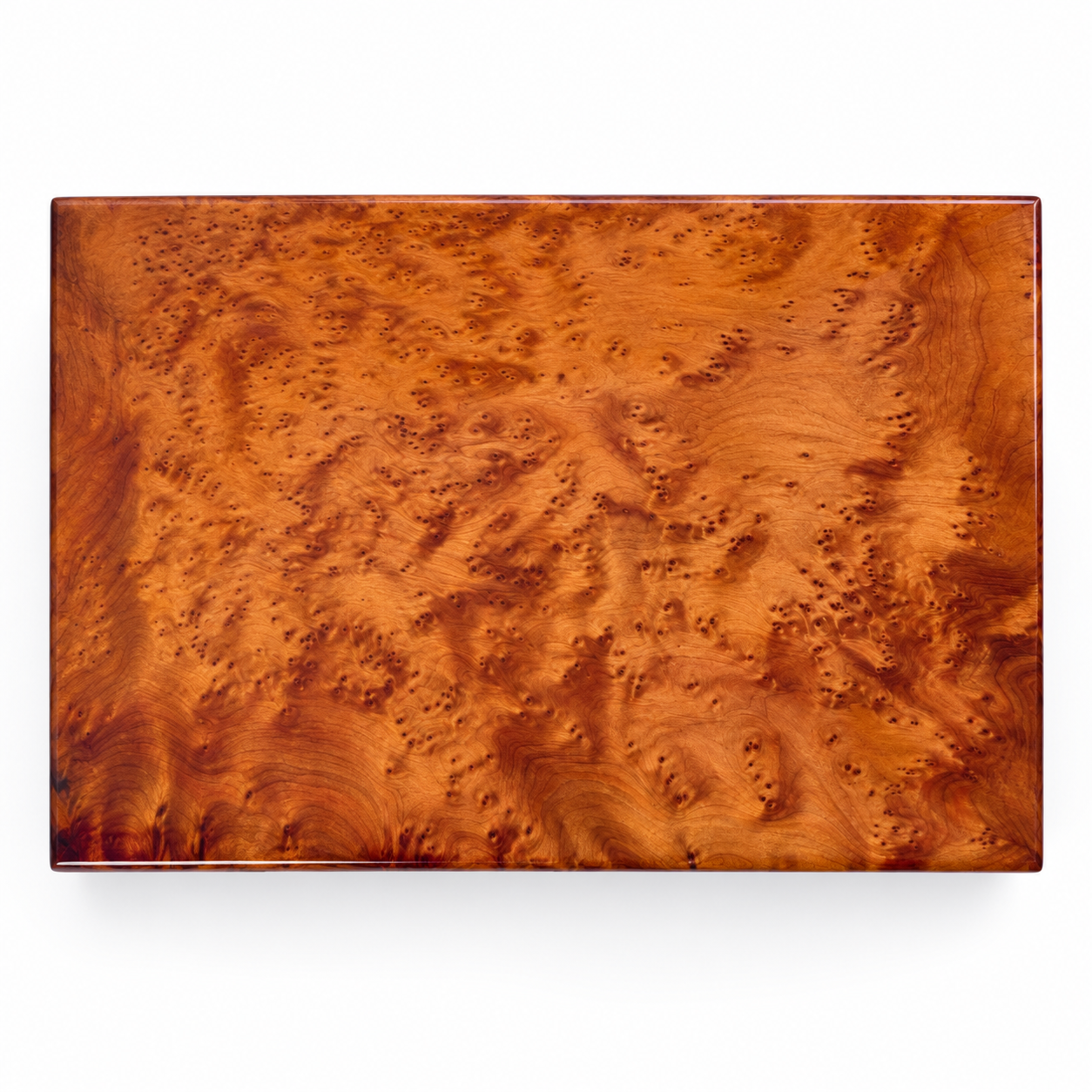
Highly figured wood is often used as a focal point on jewellery boxes, small cabinets, trays and decorative panels. A high-gloss finish may make the contrast more obvious, while a softer finish can create a quieter look. Photographs can exaggerate shine, so inspect more than one image when buying online.
Is burl wood a type of wood or a grain pattern?
Burl describes the way the wood has grown, not a standalone botanical species. You may see walnut burl, maple burl or thuya burl advertised. Those materials can differ substantially in colour, density and working properties, even though each has irregular figuring.
This is why the phrase ‘burl wood box’ is incomplete as a material description. A helpful product listing should identify the species where known, and explain whether the figured surface is solid wood, a veneer or part of a mixed construction.
What is Moroccan thuya burl?
Moroccan thuya wood comes from Tetraclinis articulata, a conifer native to parts of the western Mediterranean region. Thuya burl and root wood are especially associated with decorative objects made by craftspeople around Essaouira, Morocco. Warm amber and reddish-brown tones, sometimes combined with dark, intricate figuring, are characteristic of many finished pieces.
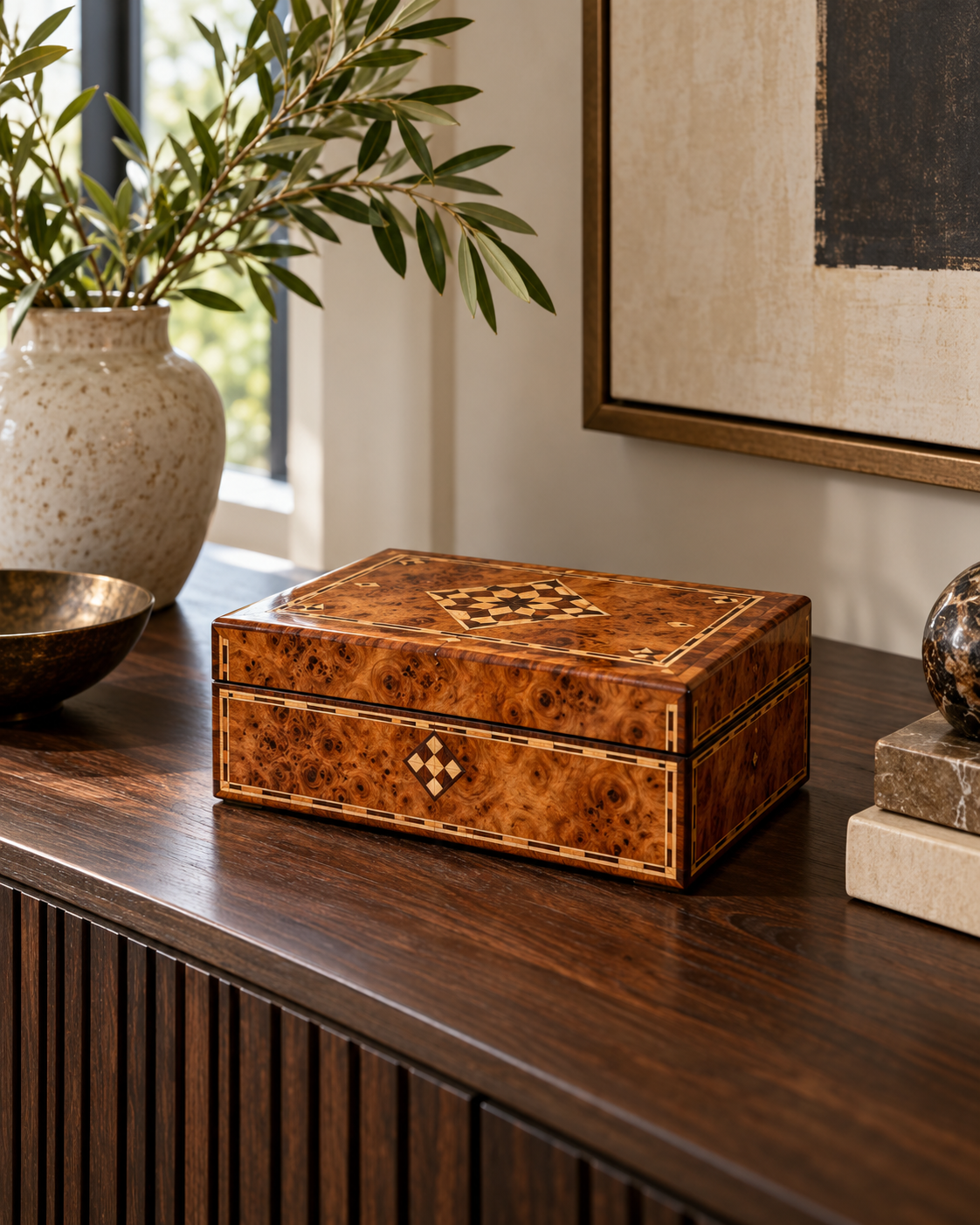
The surface of a thuya object may be combined with contrasting woods or marquetry, so not every visible pattern comes solely from natural burl grain. Read our article on thuya craftsmanship and marquetry in Essaouira to learn how decorative patterns can be assembled.
Why is burl wood used for jewellery boxes and home décor?
The chief attraction is visual individuality. A small lid or panel can display a complex grain pattern without requiring a large piece of timber. This makes burl appealing for keepsake boxes, jewellery storage, inlaid panels and small decorative accessories.
The grain itself does not guarantee quality. Well-made hinges, smooth edges, a properly fitted lid and an appropriate protective finish are just as important as an attractive surface. If you are comparing storage options, our guide to choosing a handmade wooden jewellery box explains the practical details.
Solid burl wood versus burl veneer
A solid burl component is cut from figured timber. A burl veneer is a thin layer of figured wood applied to a stable substrate. Neither construction is automatically inferior: veneer can display an attractive pattern efficiently and may be a sensible choice for broad panels, while solid pieces have different design possibilities.
For either type, ask about the underlying material, edge treatment, finish and construction. A listing that says ‘burl effect’ may refer to a printed or imitation surface rather than natural wood. Check the product description and close-up photographs rather than relying on the title alone.
How to identify genuine burl grain when shopping online
- Look for varied, non-repeating detail. Natural figured grain changes across the surface, although photography alone cannot prove authenticity.
- Request close-ups of edges and corners. These may help reveal whether a surface is solid, veneered or printed.
- Check the species and construction. ‘Burl’ describes the figure, not the precise timber.
- Compare photos in different light. Strong reflections can obscure the actual grain and colour.
- Confirm dimensions and intended use. A beautiful box still needs to fit the jewellery or keepsakes you plan to store.
How should you care for a burl wood box?
Treat a decorative burl wood box according to its finish and construction, not simply the word ‘burl’. Keep it away from prolonged dampness, direct heat and strong sunlight. Dust gently with a clean, soft cloth, and avoid harsh cleaners or soaking the surface.
Do not assume every lacquered, waxed or oiled item should receive the same polish. When unsure, ask the maker for specific instructions. Our wooden box care guide offers more general advice.
Is burl wood rare or expensive?
Highly figured material can be harder to source in consistent sizes than ordinary straight-grained timber, but prices vary widely. Species, quality of figure, size, usable yield, craftsmanship and finish all affect the price of a finished object. A small veneer-topped box and a large solid figured piece should not be compared on the word ‘burl’ alone.
Frequently asked questions
Is burl wood stronger than ordinary wood?
Not necessarily. Its irregular grain may be visually striking but can also make machining and drying more challenging. Suitability depends on the species, the particular piece, its preparation and the intended use.
Does burl wood come from a specific tree?
No. Burls can develop on different tree species. Thuya burl, walnut burl and maple burl are examples of figured material from different trees.
Is thuya burl the same as walnut burl?
No. They come from different species and can have different colours and characteristics. Our thuya wood vs walnut comparison explains the broader differences.
Can burl wood be used in modern interiors?
Yes. A richly figured box can work particularly well as one accent among simpler ceramics, books and textiles. For practical arrangements, see how to style a decorative wooden box.
Final thoughts
Burl wood is valued for the irregular figure produced by unusual tree growth. When choosing a decorative box, look beyond the pattern: ask about the species, solid wood or veneer construction, workmanship and care requirements. Those details help you choose a piece that is both beautiful and practical.